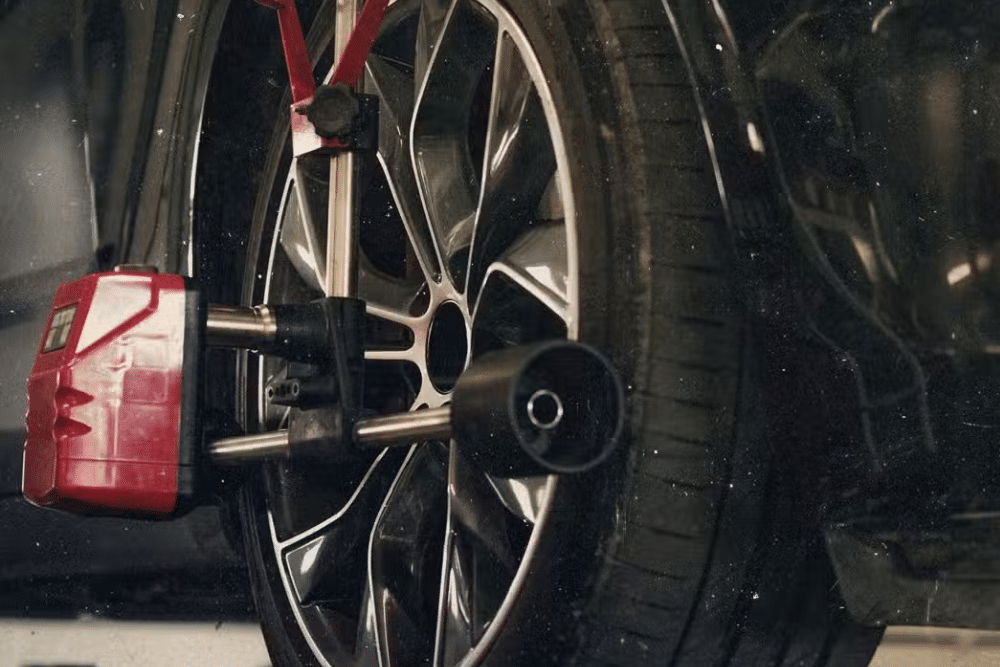
Vermont roads don’t play nice with your alignment. If you’ve ever driven through Mud Season on VT Route 30 and noticed your steering wheel pulling to one side, or spotted uneven tread on your tires after a winter of frost heaves and washboard gravel, your alignment has likely taken a hit. At Thomas’ Auto Repair in Wells, VT, we use the Hofmann Alignment Machine to measure and correct your alignment to factory specifications, not close enough, but exact.
This blog breaks down what wheel alignment really means, why Vermont’s terrain is especially hard on it, and how precision equipment makes the difference between tires that last and tires you’re replacing ahead of schedule.
What Is Wheel Alignment and Why Does It Matter
Alignment refers to the angle of your tires relative to the road and to each other. When those angles drift out of spec, your vehicle no longer tracks straight. It pulls to one side, the steering wheel sits crooked, and your tires start wearing unevenly.
Three main angles make up a proper alignment:
- Camber – the inward or outward tilt of the tire when viewed from the front
- Toe – whether the fronts of the tires point in toward each other or out away from each other
- Caster – the angle of the steering axis, which affects steering stability and straight-line tracking
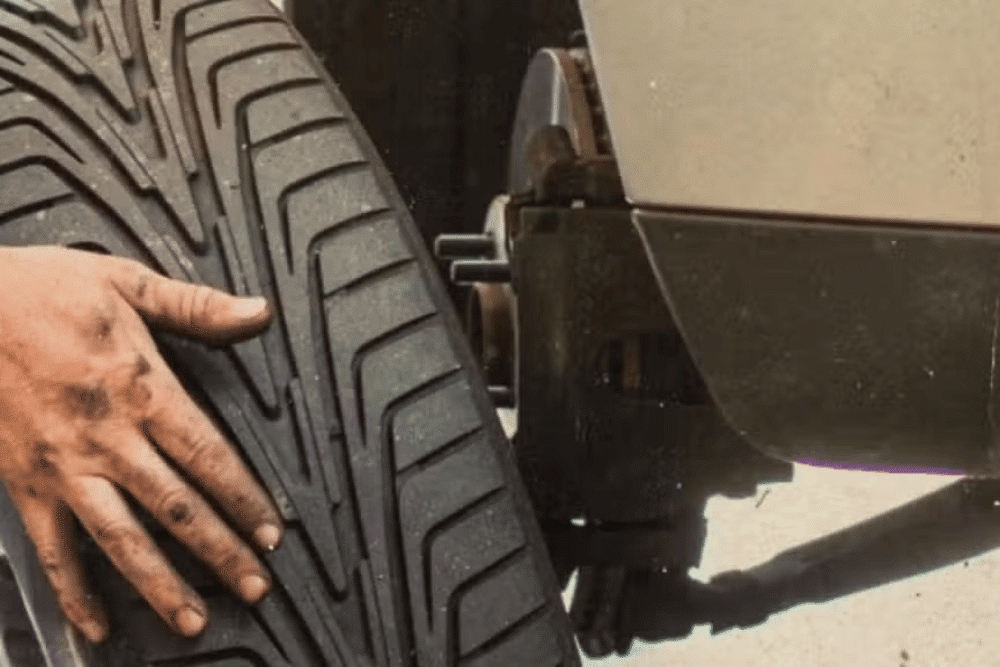
When any of these angles shift outside of the manufacturer’s spec, the effects show up fast, especially in tires and fuel efficiency. Misalignment forces your tires to scrub the pavement at a slight angle instead of rolling straight. That friction translates directly into accelerated and uneven tire wear patterns.
The bottom line: poor alignment costs you money. It wears out tires early, adds strain on suspension components, and can even reduce your fuel economy.
How Vermont’s Roads and Seasons Destroy Alignments
Mud Season Is the Real Enemy
Most drivers think alignment is something you check once and forget. In Vermont, that approach will cost you a set of tires.
Mud Season, typically March through May, is when the freeze-thaw cycle kicks the ground apart. Frost heaves push asphalt upward. Roads develop dips, ruts, and soft shoulders that swallow a tire and yank the suspension sideways. Even a single hard impact with a frost heave can knock a wheel out of alignment.
Once the ground thaws and settles, the road surface doesn’t always recover evenly. Washboard gravel stretches, potholes open up, and the same roads you drove all winter feel like a completely different surface.
All-Wheel Drive Vehicles Need Extra Attention
If you drive an all-wheel-drive vehicle through Vermont winters, your alignment matters even more. AWD systems rely on all four wheels tracking in sync. When alignment is off, the drivetrain works against itself, adding stress to differentials, axles, and transfer cases over time.
For drivers in Wells, Poultney, Dorset, Pawlet, and across the rural communities of Rutland County, the combination of gravel roads, steep terrain, and seasonal frost makes annual alignment checks a smart maintenance habit, not an optional one.
What Makes the Hofmann Alignment Machine Different
Laser-Precision Measurement, Not Guesswork
Not all alignment equipment is created equal. Basic alignment racks can give you a rough measurement, but they lack the sensitivity and accuracy of a modern, calibrated system. The Hofmann Alignment Machine uses precision sensor technology to measure all four wheels simultaneously, capturing readings down to fractions of a degree.
That level of accuracy matters because the tolerances specified by vehicle manufacturers are tight. A misalignment of even half a degree, something you might not feel immediately, is enough to start uneven tire wear. The Hofmann system reads your vehicle’s actual alignment values and compares them directly against manufacturer specifications.
Four-Wheel Alignment Done Right
A common shortcut in the industry is adjusting only the front wheels. That may be faster, but it misses the full picture. A true four-wheel alignment measures and adjusts all four corners of the vehicle. That’s what the Hofmann system enables, and it’s the only way to restore proper handling and prevent rear tires from developing their own wear patterns.
After measurements are taken, the technician adjusts toe, camber, and caster as needed and then prints a report showing before-and-after readings. You can see exactly where your vehicle was out of spec and how it was corrected.
Signs Your Alignment Needs Attention
You don’t always need to wait for your next scheduled visit to know something is off. Watch for these tire wear patterns and handling symptoms:
- Pulling to one side while driving on a straight, level road
- Steering wheel off-center when driving straight
- Uneven tire wear, where one edge of the tread wears faster than the other
- Vehicle wandering or requiring constant small corrections to stay in your lane
- Vibration in the steering wheel, especially at highway speeds
If you’ve recently hit a significant pothole, driven through a soft shoulder, or noticed any of these signs, it’s worth getting your alignment checked before the tire wear gets worse.
Ready to schedule? Reach out to Thomas’ Auto Repair at 1092 VT Route 30, Wells, VT 05774, or call us at (802) 645-9122. We’ll get you in, measure all four corners, and give you a clear picture of what’s going on.
When Should You Get an Alignment in Vermont
Most manufacturers recommend an alignment check every 12 months or 12,000 miles under normal conditions. Vermont conditions are not normal.
Here’s a practical Vermont-specific alignment schedule to follow:
- After every Mud Season (April or May): Frost heaves and thaw damage are fresh, and this is when alignment drift is most common
- After hitting a major pothole or frost heave: One hard impact can be enough
- With new tires: Starting a new set of tires on a misaligned vehicle wastes the investment immediately
- After front-end suspension work: Any repair or replacement involving tie rods, control arms, or struts will require a realignment
- If you notice any handling changes: Don’t wait for the next scheduled service if something feels off
Annual alignment service, timed around the end of Mud Season, is one of the most cost-effective maintenance habits a Vermont driver can build. Tires are expensive. Protecting them with a properly calibrated alignment is a smart return on a small investment.
Why Thomas’ Auto Repair Is the Right Choice for Alignment Service in Wells
Thomas’ Auto Repair has been part of the Wells community since 1996. Keith Thomas and his team grew up driving these same roads, and that firsthand experience shapes every alignment job we do.
When you bring your vehicle in for a Hofmann alignment service, here’s what you can count on:
- Hofmann Alignment Machine: four-wheel precision measurement to manufacturer specifications, not rough estimates
- 2-year/24,000-mile warranty: backed by Certified Auto Repair on qualifying repair work
- ASE-certified technicians: Our team understands Vermont driving conditions and the vehicles that handle them best
- Digital vehicle inspections via Tekmetric: photo and video documentation of your vehicle’s condition, sent straight to you
- Loaner cars and shuttle service: so you’re never left stranded while your vehicle is being serviced
- Honest recommendations: we tell you what your vehicle needs, not what runs up your bill
We’ve been taking care of vehicles in Wells, Granville, Hebron, Middletown Springs, and across the region since 1996.
FAQs About Hofmann Alignment Service and Wheel Alignment
How often should I get an alignment in VT?
In Vermont, a wheel alignment check is recommended at least once a year, ideally after Mud Season. Frost heaves, potholes, and thaw-damaged roads are harder on alignment than typical pavement. Even if your vehicle tracks straight, annual checks catch gradual drift before it causes significant tire wear.
Does a bad alignment ruin tires?
Yes. Misalignment causes rapid, uneven tire wear by forcing the tire to scrub against the pavement at an incorrect angle rather than rolling cleanly. Catching and correcting misalignment early can significantly extend tire life and prevent costly early replacement.
What are the signs of bad wheel alignment?
Your vehicle pulling to one side, an off-center steering wheel on a straight road, and uneven tread wear across the tire’s surface are the most common signs of misalignment. If you notice any of these symptoms, having your alignment measured promptly will help you avoid further tire damage.
What is a four-wheel alignment vs. a front-end alignment?
A four-wheel alignment measures and adjusts all four wheels to manufacturer specifications, while a front-end alignment addresses only the front axle. Four-wheel alignment is the more thorough option and is particularly important for all-wheel-drive and front-wheel-drive vehicles, where rear angle drift can also cause tire wear.
Schedule Your Hofmann Alignment Service in Wells, VT Today
Don’t let Vermont roads wear out your tires ahead of schedule. Thomas’ Auto Repair has the precision equipment and the firsthand Vermont experience to get your alignment back to factory specs.
Schedule your Hofmann alignment service today and protect your tires, your suspension, and your peace of mind. Visit us at 1092 VT Route 30, Wells, VT 05774 (802) 645-9122 or Schedule an appointment online.